


Are you struggling with heavy menstrual bleeding, chronic pelvic pain, or a persistent feeling of abdominal pressure caused by uterine fibroids? You no longer have to fear major surgery. Thanks to developments in Interventional Radiology, you can now eliminate these symptoms and treat uterine fibroids without surgery, general anesthesia, or the need for a hysterectomy.
Dr. Amr El-Sakka—a faculty member of Interventional Radiology and a prominent member of leading European and Arab specialized societies (CIRSE, PAIRS)—offers a safe and highly effective solution: Uterine Fibroid Embolization (UFE). This minimally invasive procedure stands at the forefront of modern medical technology for treating uterine fibroids.
Continue reading to discover how this advanced treatment can help you reclaim your quality of life.
What is Uterine fibroids treatment?
UFE is a precise, non-surgical uterine fibroids treatment that shrinks tumors by blocking their blood supply. Instead of surgical removal or a hysterectomy, this procedure cuts off the blood flow, causing fibroids to shrink and symptoms to disappear.
As a safe alternative to surgery, it is the ideal uterine fibroids treatment for women wanting to preserve their uterus. With Dr. Amr El-Sakka, this procedure is performed with maximum precision using the latest imaging technology.
How is Non-Surgical Uterine Fibroids Treatment Performed via Catheterization?
The procedure is conducted in a specialized interventional radiology department, using advanced imaging to ensure patient safety. Here are the core steps of this uterine fibroids treatment:
1. Pre-Procedure Preparation
- Clinical exams, blood tests, and imaging are performed to map the fibroids’ size and location.
- Dr. Amr El Sakka explains the procedure details, and consent is obtained.
- Preventative antibiotics may be administered to avoid infection.
2. The Catheterization Process
- Under local anesthesia (at the groin or wrist), a micro-catheter is inserted into the artery.
- Using real-time X-ray or ultrasound guidance, the catheter is navigated directly to the uterine arteries feeding the fibroids.
3. Embolization (Blocking the Fibroids)
Tiny particles are injected through the catheter to block blood flow. This starves the tumors, causing them to shrink progressively. This is a highly effective uterine fibroids treatment that preserves the uterus.
4. Post-Procedure Follow-up
- The catheter is removed, and light pressure is applied to the entry site.
- After a few hours of observation, most patients can return home the same or the following day.
Benefits of UFE (Uterine Fibroids Treatment)
This advanced uterine fibroids treatment is often the preferred choice due to several key advantages:
- Uterus Preservation: Ideal for women planning future pregnancies.
- Local Anesthesia: Safer for those with chronic health issues.
- Rapid Symptom Relief: Significant reduction in pain and bleeding within weeks.
- Fast Recovery: Return home the same day and resume normal life in less than a week.
- No Scars: Performed through a tiny 2 mm incision.
Under the expertise of Dr. Amr El-Sakka, this uterine fibroids treatment offers a safe, precise, and non-surgical revolution in women’s health.
Definition uterine fibroids
Uterine fibroids are common, non-cancerous growths of the uterus that typically appear during reproductive years. They range in size from tiny to large masses that can compress the uterus and make the abdomen appear pregnant.
Signs of uterine fibroids
Many women have no symptoms. However, when they occur, the most common signs include
- Heavy or painful menstrual bleeding.
- Prolonged or frequent periods.
- Pelvic pressure, pain, or lower back pain.
- Frequent urination or constipation.
- Increased abdominal size or pain during sex.
Types of uterine fibroids
Fibroids are classified by their location, which often determines the best uterine fibroids treatment approach:
- Intramural: Embedded within the muscular wall of the uterus (the most common type).
- Submucosal: Growing just under the inner lining, bulging into the uterine cavity.
- Subserosal: Located on the outer surface of the uterus; these can grow quite large.
- Pedunculated: Attached to the uterus by a thin stalk (mushroom-like appearance).
Why Choose Dr. Amr El Sakka for Non-Surgical Uterine Fibroids Treatment?
By choosing Dr. Amr El-Sakka—a Faculty Member of Interventional Radiology and a member of prestigious societies like CIRSE and PAIRS—you are choosing a blend of expertise, precision, and safety.
Here is why he is the leading choice for your uterine fibroids treatment:
- Specialized Expertise: A master of precise, non-surgical interventions.
- Advanced Technology: Utilizing the latest interventional radiology tools for high-accuracy tumor localization.
- High Success Rates: Achieving over 95% success, with significant symptom relief within weeks.
- Comprehensive Care: Dedicated post-procedure follow-up to ensure full recovery and uterine health.
With Dr. Amr El-Sakka, you receive integrated care from the first consultation to full recovery—pain-free and without the need for surgery.
Start your journey toward a safer uterine fibroids treatment today. Experience the intersection of medical expertise and genuine patient care.
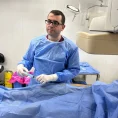
- He holds a PhD in Diagnostic and Interventional Radiology from the Faculty of Medicine - Al-Azhar University.
- Faculty member of Interventional Radiology, Faculty of Medicine and Al-Azhar University Hospitals
- Member of the Egyptian Society of Interventional Radiology (EgSIR)
