


For years, an enlarged spleen was a high-risk condition, particularly for those with liver cirrhosis or blood clotting issues. Traditional surgical removal was often too dangerous due to the threat of severe bleeding. However, modern interventional radiology has introduced a breakthrough: splenomegaly treatment without surgery.
Under the expert guidance of Dr. Amr El-Sakka, this procedure offers a precise, calculated way to manage the spleen’s activity using advanced catheter technology. This non-invasive approach isn’t just an alternative; it is a safer, more effective revolution for high-risk patients.
Understanding Splenomegaly
The spleen is a fist-sized organ responsible for filtering blood and boosting immunity. Splenomegaly occurs when the spleen swells—potentially reaching triple its normal size and weight—due to infection, liver disease, or blood disorders. While not always a disease itself, an untreated enlarged spleen can malfunction or even rupture, making splenomegaly treatment without surgery a vital, life-saving option for high-risk patients.
Let’s explore the symptoms, causes, diagnosis, and complications of an enlarged spleen and how splenomegaly treatment without surgery provides a modern, life-saving solution for high-risk patients.
Common Splenomegaly Symptoms
An enlarged spleen often presents through the following:
- Abdominal Pain: Discomfort in the upper left quadrant, sometimes radiating to the left shoulder or back.
- Early Fullness: Feeling full quickly after eating as the spleen presses against the stomach.
- Systemic Signs: Unusual fatigue (anemia), frequent infections, and easy bruising or bleeding.
Primary Splenomegaly Causes
The spleen can enlarge due to several underlying factors:
- Liver Disease: Cirrhosis or chronic hepatitis causing portal hypertension, which forces blood to pool in the spleen.
- Infections: Viral (HIV), bacterial (TB), or parasitic (malaria) infections.
- Blood Disorders: Conditions like leukemia, lymphoma, or hemolytic anemia.
- Inflammatory Diseases: Autoimmune triggers such as Lupus or Rheumatoid Arthritis.
Complications of Splenomegaly
Neglecting treatment can lead to dangerous outcomes:
- Hypersplenism: The spleen becomes “hyperactive,” destroying healthy blood cells.
- Spleen Rupture: A fragile, enlarged spleen can rupture from minor impact, causing life-threatening internal bleeding.
- Tissue Death: The spleen may outgrow its blood supply, leading to organ damage.
Modern Splenomegaly Diagnosis
Healthcare providers typically detect an enlarged spleen through a physical exam where the spleen becomes palpable. To confirm the severity and cause, Dr. Amr El-Sakka utilizes the following:
- Advanced Imaging: Ultrasound, CT, or MRI to assess size and blood flow.
- Blood Panels: To check liver function and cell counts.
- Bone Marrow Analysis: In specific cases, to rule out complex blood disorders.
Splenomegaly treatment without surgery offers a life-saving alternative. Using a precise micro-catheter, Dr. Amr El-Sakka can safely reduce the spleen’s activity and size, restoring it to a healthy state without the dangers of a major operation.
Splenomegaly Treatment Without Surgery: The procedure
The goal of splenomegaly treatment without surgery is to achieve partial shrinkage (atrophy) of the spleen rather than disabling it entirely. This allows the body to maintain its vital immune functions while eliminating painful symptoms.
Step-by-Step with Dr. Amr El-Sakka:
- Comfort First: Performed under local anesthesia; you remain fully awake and comfortable.
- Micro-Catheter Access: A tiny tube is inserted through the femoral artery in the thigh.
- Imaging Guidance: Dr. El-Sakka uses real-time X-ray guidance to navigate the catheter to the main splenic artery.
- Partial Embolization: Specialized microbeads are injected to partially block blood flow.
- Restored Balance: This reduced blood flow stops the spleen from over-filtering and destroying healthy blood cells.
Why Choose Splenomegaly Treatment Without Surgery?
This modern approach, perfected by Dr. Amr El-Sakka, offers unmatched benefits:
- Efficiency: The procedure typically takes only 10 to 15 minutes.
- Safety: No abdominal incisions, no stitches, and no risk of surgical hemorrhage.
- Rapid Recovery: Most patients return home the same day and see blood count improvements within 2 to 4 weeks.
Splenomegaly treatment without surgery has saved countless patients for whom traditional surgery was considered fatal.
Top Specialist for Splenomegaly Treatment Without Surgery
The success of this procedure depends entirely on the physician’s precision. Improperly blocking the splenic artery can lead to complications; therefore, achieving the perfect balance is vital.
Dr. Amr El-Sakka is recognized as one of Egypt’s premier interventional radiologists, known for his clinical mastery in controlling the exact embolization ratio to preserve spleen health while stopping its overactivity.
Qualifications of Dr. Amr El-Sakka:
- Academic Leadership: Consultant with a Doctorate in Diagnostic and Interventional Radiology and Faculty Member at Al-Azhar University.
- Global Recognition: Active member of the European (CIRSE), Pan-Arab (PAIRS), and Egyptian (EgSIR) societies.
- Proven Precision: Extensive experience in non-surgical vascular treatments, ensuring high success rates for even the most complex cases.
With splenomegaly treatment without surgery, you can avoid the risks of traditional operations and regain your health safely. Don’t wait for complications—trust the expertise of a world-class specialist.
Book your consultation today with Dr. Amr El-Sakka to discover the most effective plan for splenomegaly treatment without surgery.
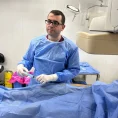
- He holds a PhD in Diagnostic and Interventional Radiology from the Faculty of Medicine - Al-Azhar University.
- Faculty member of Interventional Radiology, Faculty of Medicine and Al-Azhar University Hospitals
- Member of the Egyptian Society of Interventional Radiology (EgSIR)
